
Why Solar Inverters Switch Off When Grid Voltage Runs High
Disclosure: we are a Powur Ambassador. If you request a quote through our Powur link, we may earn a commission. This does not affect your pricing. How we make money.
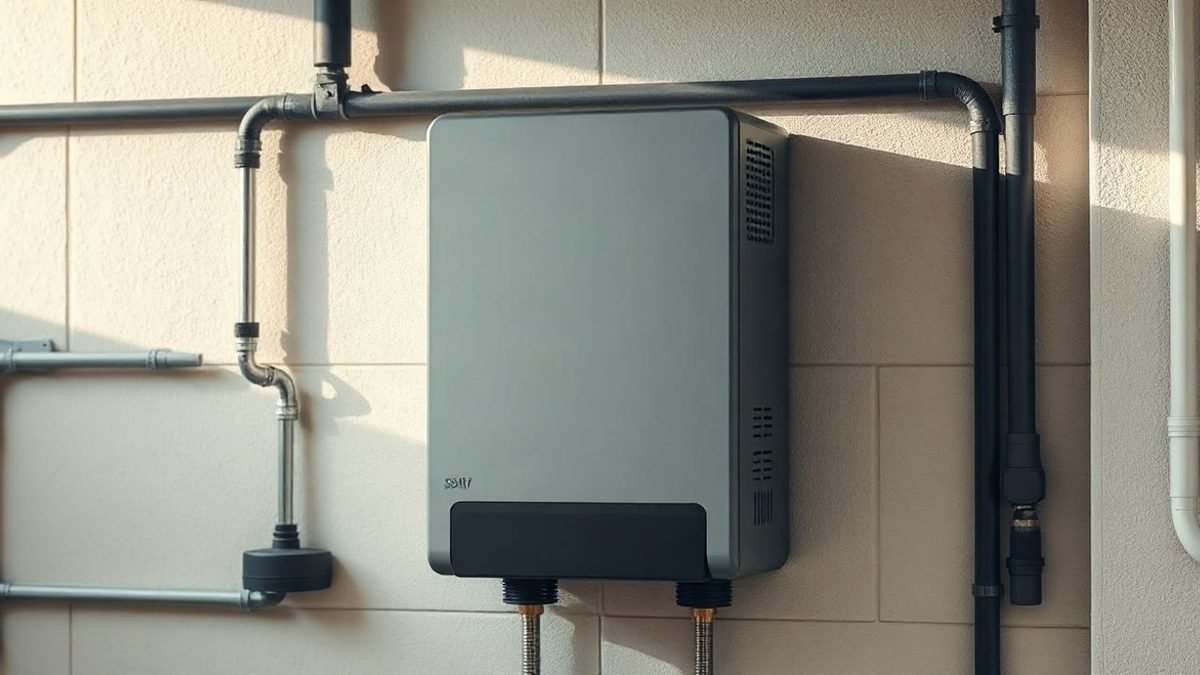
Why solar inverters switch off when grid voltage runs high
Solar inverters switch off when grid voltage runs high because they are required to disconnect whenever the utility supply moves outside a safe voltage range. This protection, often called overvoltage trip or volt-watt response, prevents the inverter from feeding power into a grid that may be unsafe or unstable. It is normal, mandated behavior, not usually a sign that your equipment is broken.
For homeowners, the frustrating part is that these shutdowns tend to happen on bright, cool days when the solar array could produce the most. Understanding why the trip occurs, and what actually influences it, helps you respond sensibly instead of chasing phantom faults.
Key takeaways
- Grid-tied inverters must disconnect when utility voltage rises above limits set by interconnection standards; this is a safety feature, not a defect.
- High grid voltage is often worst in the middle of the day on sunny, mild days, when lots of solar is exporting and local demand is low.
- Long or lightly loaded service conductors can add voltage rise between the transformer and your inverter, making your site trip before your neighbors' systems do.
- Many modern inverters offer configurable settings or ride-through features, but changes usually require utility approval and a qualified installer.
- If trips are frequent, document the events and discuss them with your installer and utility; solutions range from wiring changes to inverter settings.
In this article
- Why solar inverters switch off when grid voltage runs high
- What overvoltage protection actually does
- Why does grid voltage run high in the first place?
- Why do shutdowns cost you more than they seem to?
- What can homeowners actually do about it?
- Does this affect which inverter you should buy?
- Common misconceptions about high-voltage shutdowns
- FAQ
- The bottom line
- Sources
What overvoltage protection actually does
A grid-tied inverter has one core job: convert DC power from your panels into AC power that matches the utility grid precisely in voltage, frequency, and phase. To do that safely, it constantly measures the grid at its terminals. If voltage or frequency drifts outside permitted windows, the inverter must reduce output or disconnect entirely.
This requirement exists for two reasons. First, utility workers must be able to trust that customer-owned equipment stops exporting during an outage, a concept known as anti-islanding. Second, equipment connected to the grid can be damaged by sustained voltage outside its design range, so the inverter protects itself and your appliances by stepping back.
Standards such as IEEE 1547, which governs how distributed energy resources interconnect with US grids, define the voltage ride-through and trip settings that inverters must follow. Your inverter is not being dramatic; it is following rules it was certified under.
The typical trip sequence
- The inverter measures grid voltage continuously at its AC terminals.
- Voltage rises above a defined threshold, or stays above a softer threshold for a set time.
- The inverter first tries to ride through briefly or curtail output smoothly (volt-watt response on newer models).
- If voltage remains high, it disconnects and waits, monitoring until the grid returns to the allowed range.
- Once conditions normalize, it reconnects automatically after a short delay.
On monitoring apps these events appear as "grid overvoltage," "AC voltage out of range," or similar fault codes. Brief trips may barely register; repeated midday trips show up as a sawtooth pattern in your production graph.
Why does grid voltage run high in the first place?
Utility transformers are typically set to deliver voltage slightly above the nominal 120/240 V level, because voltage sags as electricity travels through wires. A house near the transformer, with light local demand, can see 124 to 126 V or more even before solar is considered. That is within the utility's allowed range but leaves less headroom for anything that pushes voltage higher.
Solar adds its own push. When your inverter exports power, it must raise its output voltage slightly above the grid voltage at the point of connection in order for current to flow outward. On a long cable run or thin conductors, that extra push adds measurable voltage rise. The further your inverter sits from the transformer, and the more heavily the shared wiring is already loaded, the higher your terminal voltage climbs during export.
The worst combination is a sunny, mild afternoon: abundant solar production across the neighborhood, low air-conditioning demand, and therefore lots of power flowing back through local transformers. This is exactly when inverters are most likely to trip.
Factors that make one home trip while the neighbor does not
- Distance from the transformer: longer service laterals and secondary conductors mean more voltage rise during export.
- Wire sizing: undersized or long AC runs between the inverter and the main panel increase impedance and voltage lift.
- Where the inverter connects: a connection point far from the main panel or meter sees different voltage than the service entrance.
- Local conditions: a strong or weak neighborhood grid, the transformer tap setting, and how many nearby systems are exporting all matter.
- Inverter settings: factory trip points vary by model and by the grid profile the installer selected at commissioning.
Why do shutdowns cost you more than they seem to?
A five-minute trip costs little. The real cost comes from repeated cycling on bright days, especially during spring and fall when solar production is strong and loads are moderate. Each time the inverter disconnects, production drops to zero until voltage settles and the reconnect delay passes.
There is also a subtler effect: newer inverters use volt-watt response, which reduces output gradually as voltage climbs rather than switching off abruptly. Curtailment is smoother and less visible, but it still means fewer kilowatt-hours exported on high-voltage days. If your monitoring shows production dipping whenever voltage trends high, that is the mechanism at work.
None of this damages a properly functioning inverter; the behavior is by design. The loss is simply energy you paid for and cannot use or export during those windows.
What can homeowners actually do about it?
This is where expectations matter. You cannot and should not disable overvoltage protection, and most of the grid conditions causing trips are outside your control. But there are practical steps worth discussing with a licensed installer.
1. Confirm the diagnosis before changing anything
Ask your installer to pull the inverter's event log. It should show voltage at the time of each trip. Comparing logged voltage with your utility's nominal range tells you whether you are marginally over the line or well beyond it. Intermittent trips a fraction of a volt above the limit are a very different problem from sustained 130 V readings.
2. Review the inverter's grid profile and settings
Many inverters allow installers to adjust trip thresholds within utility-approved windows, enable ride-through functions, or activate volt-watt curtailment. Changing grid settings without approval is generally not permitted, because these settings are part of your interconnection agreement. The right path is to ask your installer which adjustments are allowed in your utility's territory.
3. Fix voltage rise on your own side of the meter
If the event log shows the voltage at the inverter is significantly higher than at the meter, your own wiring may be adding unnecessary rise. Options an electrician or installer can evaluate include shortening or upsizing the AC conductors between the inverter and the point of interconnection, or relocating the connection point closer to the main panel. These are ordinary electrical work items, not exotic fixes.
4. Raise the issue with your utility
If logged voltages are high even when your system is not exporting, the cause may be on the utility side, such as a transformer tap set high for the neighborhood. Utilities can investigate and, where warranted, adjust their equipment. Bring your installer's voltage data; concrete numbers carry far more weight than a complaint about lost production.
5. Consider how storage or load shifting fits in
Batteries and smart load control do not fix grid voltage, but they change your exposure. Storing or using solar power on site instead of exporting it reduces the voltage rise your inverter creates, and an inverter paired with storage may be able to shift operation when the grid is stressed. If high-voltage trips are chronic, it is worth asking how battery options interact with your situation; our guide to choosing a solar battery for off-grid living covers storage fundamentals that apply to hybrid systems as well.
Does this affect which inverter you should buy?
Indirectly, yes. Inverters differ in how gracefully they handle marginal grid conditions. Models with well-implemented volt-watt response and configurable ride-through can keep producing (at reduced output) in conditions that would hard-trip a less sophisticated unit. When comparing equipment, look at whether the manufacturer publishes the grid profiles and voltage ranges the unit supports for your utility.
The architecture of your system matters too. String inverters, microinverters, and power optimizers respond to grid conditions at different points in the system, and per-panel devices can behave differently from a single central unit during grid events. If you are still weighing options, our comparison of microinverters vs power optimizers explains how these architectures differ in day-to-day behavior.
What you should not do is choose equipment based on claims that it ignores grid standards. Any inverter certified for grid interconnection must trip or curtail within regulated windows. A product that stayed connected at unsafe voltages would fail interconnection review and could put your utility agreement at risk.
Common misconceptions about high-voltage shutdowns
"My inverter is faulty if it trips"
Occasional trips during high-voltage periods are the system working as certified. A genuine fault looks different: trips at normal voltage, failure to reconnect, or error codes that persist. Your installer can distinguish between the two using the event log.
"Solar caused the whole neighborhood's voltage problem"
Hosted solar does raise local voltage during export, but voltage also depends on transformer settings, load patterns, and conductor conditions that predate any installation. Attribution is a utility engineering question, not something a homeowner can settle from a monitoring app.
"Turning the system off manually will protect it"
Manual shutoffs are unnecessary and just cost you production. The inverter manages grid conditions automatically, and repeated manual shutdowns can complicate the event record you need when working with your installer or utility.
FAQ
What voltage level causes a solar inverter to trip?
Exact thresholds vary by inverter model and by the grid profile configured at installation, and they are defined by interconnection standards such as IEEE 1547 and your utility's requirements. In general, a grid-tied inverter for a 120 V circuit will begin curtailing or timing out somewhere above roughly the mid-120-volt range and disconnect if high voltage persists. Your inverter's manual and event log are the authoritative reference for your unit.
Is it bad for my inverter to keep switching off?
No. Repeated trips are designed behavior and are not harmful to a functioning unit. The cost is lost production, not equipment damage. However, frequent trips are worth investigating, because they indicate a persistent voltage condition on your service or in your neighborhood.
Why do my trips happen on sunny, mild days?
Those are the days when the most solar power is being exported across your area and household demand is low, so local grid voltage rises the most. Your inverter pushes against an already-elevated grid and reaches its trip point first, even though it is producing at its best.
Can I change my inverter's overvoltage settings myself?
Generally, no. Grid protection settings are typically locked or restricted, and changing them usually requires a qualified installer and, in many cases, utility approval because the settings are tied to your interconnection agreement. Start with your installer and the event log rather than adjusting anything directly.
Will a battery stop the shutdowns?
A battery does not change grid voltage, but storing or consuming your solar on site reduces how much you export, which reduces the voltage rise your inverter contributes. Some hybrid inverters also manage output differently under grid stress. Whether storage pencils out for you depends on your goals, rates, and how often trips actually occur.
The bottom line
Inverters switch off at high grid voltage because interconnection rules require them to, and the underlying voltage conditions usually trace back to the shared grid rather than your equipment. Your practical levers are documentation, correct wiring on your side of the meter, approved settings changes, and a constructive conversation with your utility armed with logged data. If you are early in the planning stage, understanding how different system architectures handle grid events is worth the time; our guide to off-grid solar systems for cabins is a useful starting point for thinking about how much grid dependence you want at all.
Sources
This article is general information, not tax, legal or financial advice. Figures are illustrative; confirm current rules and incentives with the official program or a qualified professional. Learn more
Planning a New Solar System?
Request a solar quote through our Powur link, and ask how the inverter would be set up for your local grid. Powur serves U.S. homes only, and availability varies by state, so check with Powur that your address is covered. Disclosure: HomeSolarStudio.com is a Powur Ambassador and may earn a commission if you request a quote through this link. This does not affect your pricing.
Get a Powur Solar Quote